In the world of SEO, guesswork is the enemy of growth. While many tools offer surface-level insights, true technical SEO requires deep, granular data about every page, link, and element on your site. For professionals who demand this level of detail, Screaming Frog SEO Spider stands as an indispensable desktop application. More than just a tool, it's a comprehensive audit engine that crawls websites like Googlebot, revealing the technical foundations that make or break search performance.
This review explores how this powerful software moves beyond keyword research to diagnose site health, optimize architecture, and provide the data-driven clarity needed for advanced SEO strategy.
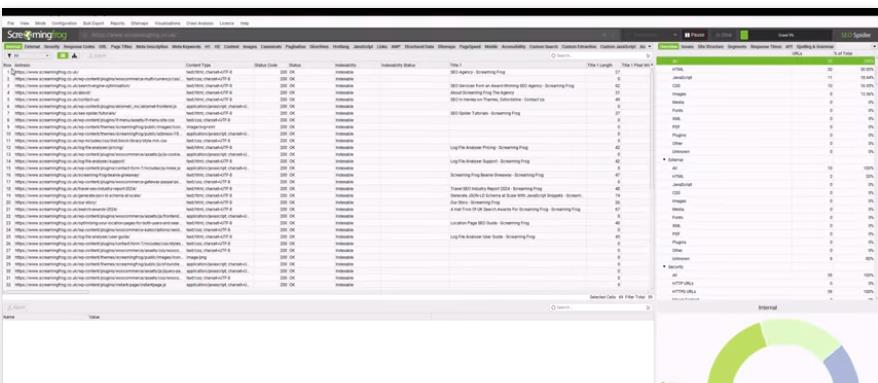
Core Function: Crawling with Surgical Precision
At its heart, the SEO Spider is a website crawler. You give it a starting URL, and it systematically explores every link it can find, building a detailed map of your site's structure. Unlike many cloud-based tools with limited crawl budgets, the desktop version (in its paid license) allows for deep, extensive crawls of even the largest websites, giving you complete control over the data.
Key Capabilities and Professional Insights
The tool's power lies in its ability to audit the critical technical pillars of SEO:
1. Comprehensive Site Structure & Indexability Analysis
It generates a visual sitemap, showing how pages are interlinked.
It instantly identifies crucial indexation issues: pages blocked by `robots.txt`, tags with `noindex` directives, or those missing canonical tags.
You can audit every page's HTTP status code (finding 404s, 500s, and redirect chains) and review meta data (title tags, meta descriptions, H1s) at scale for duplicates, truncation, or missing elements.
2. Deep Dive into Internal & External Linking
Analyze your site's internal link equity distribution. Identify orphaned pages (with no internal links) and key pages that may deserve more internal support.
Review all external outbound links on your site, checking their status and `rel` attributes (`nofollow`, `sponsored`).
Examine incoming internal links to understand which pages are the most authoritative within your own site.
3. Technical Performance and Rendering Audit
Extract key on-page elements to audit structured data, image `alt` attributes, and identify slow-loading pages.
Integrate with Google Search Console API to pull in critical performance data (clicks, impressions, average position) directly alongside your crawl data, creating a powerful unified dataset.
The paid version includes a JavaScript rendering mode, allowing the crawler to see your site as a modern browser (and Google) does, uncovering content that requires JS to load.
4. Log File Analysis and Competitive Intelligence
A standout professional feature is the ability to analyze server log files. By overlaying crawl data with real user and bot visit logs, you can see exactly which pages Googlebot is crawling, how often, and where it's wasting crawl budget on unimportant pages.
You can also crawl competitor websites (respectively) to reverse-engineer their site structure, analyze their internal linking strategy, and gather intelligence.
The Workflow: Data to Action
The typical process is: Crawl -> Audit -> Export -> Fix.
1. Configure & Crawl: Set up your crawl settings (like respecting robots.txt, limiting crawl depth) and start the spider.
2. Analyze in UI: Use the tab-based interface (Internal, External, Images, etc.) to filter and sort through issues.
3. Export & Report: Export any view to CSV or Excel for further analysis, or use the tool's built-in visualizations (like the site structure diagram) for stakeholder reports.
4. Diagnose & Implement: Use the findings to guide technical fixes, such as repairing broken links, optimizing thin content, or restructuring internal links.
Who Is Screaming Frog SEO Spider For?
This is not a beginner's tool. It is essential for:
In-House SEOs & Consultants: Who need deep, unfiltered access to their site's technical data.
Web Developers & Technical Marketers: Who implement the fixes and need precise instructions.
Agencies: Auditing client sites efficiently and providing high-value, detailed reports.
Site Owners of Medium-to-Large Websites: Where technical debt can significantly impact organic traffic.
Points to Consider: The Learning Curve
Interface: It presents data in a dense, spreadsheet-like manner. The value is in the data, not in a glossy, simplified dashboard.
Pricing: It operates on a freemium model. The free version is limited to crawling 500 URLs. For full functionality, an annual license is required.
Knowledge Requirement: To use it effectively, you need a solid understanding of technical SEO concepts. It provides the "what," and you must determine the "so what" and "how to fix."
Final Verdict: The Technical SEO's Microscope
Screaming Frog SEO Spider is less of a tool and more of a professional-grade diagnostic suite. For anyone serious about technical SEO, it is non-negotiable. It provides the granular, actionable data that cloud-based platforms often generalize or miss.
If your SEO work involves moving beyond keywords and into the architecture, health, and performance of a website, investing time in learning this tool will pay exponential dividends. It turns the opaque process of how Google sees your site into a clear, actionable blueprint for improvement.